

As a rugged display company, it’s no secret that the most popular application for our monitors is the military. From naval vessels to tactical vehicles, helicopters, and other equipment, mission-critical applications require electronics that are able to withstand demanding environments.
While the battlefield presents a unique set of challenges, it’s far from the only demanding environment that requires high-quality displays. As a leader in the military display market, we’ve been able to apply many of the same design principles that go into mission-critical environments to other industries. Below are some examples of non-military uses for military-grade monitors.
Maritime

Although the U.S. Navy has been one of our largest customers over the years, commercial maritime vessels face many of the same challenges that military vessels do. Displays installed on any boat must be able to withstand the rigors of the high seas. Waterproof sealing (IP Rating) is one of the most common of these requirements, with crashing waves and unpredictable weather subjecting electronics to water at any given time.
Another common requirement is shock and vibration resistance, with rough seas causing boats to shake unpredictably. Navigational displays must be easy to interpret in all conditions, with high contrast and sunlight readability often a requirement.
Public Transit
Another environment that requires durable displays is public transportation. From digital signage that display maps and arrival times to security displays, while not “mission-critical,” transit displays still show vital information to ensure people safely get where they need to go.
Some transit stations are outdoors, requiring weather proofing for extreme temperature shocks, rain, wind, and snow. Even stations that are indoors are often not ventilated, and subject to similar conditions.
Shock and vibration resistance is also essential for transit displays, with trains frequently arriving and departing, along with people occasionally bumping into the monitors. Vandal shields are common additions to these displays, to prevent from both intentional and unintentional damage.
Theme Parks
While the joyful wholesome experience of a theme park might seem like the furthest place from a battlefield, many of the same design constraints apply. From digital signage to ride operation terminals, many of these screens are outdoors and require weatherproofing, from water resistance to sunlight readability.

General Digital Barracuda Display on Pedicab in Orlando, FL
Shock and vibration resistance is also applicable here, with rides often causing shaking that must be accounted for in the design process
Elevators
Elevators are another common application for ruggedized displays, with both image clarity and rider safety being paramount. As elevators go up and down and people get on and off, they shake much more than you might realize. The last thing you want to happen when trapped in an enclosed space is for shattered glass or damaged electronics potentially causing a fire.
While shock and vibration resistance is obviously a must-have, high-quality images are also a common requirement. Many elevators are installed in tourist attractions and luxury hotels, with customers demanding nothing but the best.
Gaming
Similar to the battlefield, Casinos are certainly intense—albeit for an entirely different reason. These days, slot machines are entirely digital, with high-brightness displays showing exciting images to lure in gamblers to press their luck. Many even have touch screens, with slots and digitized table games requiring players to quickly press buttons to get in their bets on time. These machines must work 100% of the time, both to maximize uptime, and to protect the casino from liability should the screen fail during a game. Not to mention some level of protection if an over-excited player hits the screen after a big win (or loss).
Law Enforcement
Law Enforcement applications are very similar to the military, with tactical vehicles and mobile command posts being deployed to countless locations across the country at a moment’s notice. These systems must be both rugged and portable, withstanding the rigors of a high-speed chase and being able to be set up out in the field. With officers relying on this equipment for intel, communications, and more, full operational uptime is essential.
Mining
To some people, mining might seem like a relic of the past. In reality, it’s one of the world’s largest and most technologically advanced industries, with a global value exceeding $1 Trillion. Mines are located in some of the world’s most remote locations, with valuable resources often being located deep underground. The drills and other equipment required for mining emit a ton of vibration, requiring the electronics used to operate them to be appropriately ruggedized. Additionally, air pressure can rapidly change with elevation, meaning that the displays must be able to operate at a number of different altitudes, from the top of a mountain to deep within the Earth’s crust.
Dust is another serious concern with electronics used for mining. Mines can be extremely dirty, with drilling operations kicking up corrosive dust that can wreak havoc on unsealed electronics. While IP ratings are often associated with waterproofing, dustproofing is essential to any display being used for this type of work.
Energy
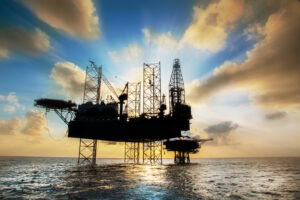
Energy is another industry where ruggedization is often a must-have. Oil and gas rigs, for example, are often subject to extreme environments, whether they are at sea or in an oil field. This requires not just shock and vibration resistance, but also waterproofing, as rain and sea water can damage unprotected electronics. Oil and gas are also found in some of the hottest and coldest environments in the world, meaning wide temperature ranges are a must. Sunlight readability is also a common requirement, as this equipment is often operated in direct sunlight. The last thing an oil company wants is their multi-billion dollar operation being shut down due to damage to an operator terminal.
Another energy application that requires rugged displays is nuclear power. While nuclear power is mostly safe, accidents do happen. When exposed to radiation, unprotected electronics can fail, turning what could be an easy fix into a disastrous meltdown. To avoid this, most equipment installed in nuclear power plants must be subjected to a process called nuclear hardening, meaning it will not break down when it matters most. Interestingly, this process is also necessary for space applications, as radiation becomes unbearable when leaving the protection of the Earth’s atmosphere.
Industrial Factories

General Digital’s Display Systems group actually began back in the 1970s in a potato chip factory, with a customer requiring an operating terminal that could withstand a humid, salty environment. In addition to humidity, factory equipment can also produce a great deal of shock and vibration, requiring the electronics used to operate them to be able to withstand vibration.
While there are countless applications for ruggedized displays, these 9 are some of the most common that we’ve come across. If your application requires a rugged display, Contact Us to discuss your requirement in more detail.