Skip to Content
Exit

Author Archives: Josh Herz

  1. Top 9 Non-Military Uses for Military Monitors

    Comments Off on Top 9 Non-Military Uses for Military Monitors

    As a rugged display company, it’s no secret that the most popular application for our monitors is the military. From naval vessels to tactical vehicles, helicopters, and other equipment, mission-critical applications require electronics that are able to withstand demanding environments.

    While the battlefield presents a unique set of challenges, it’s far from the only demanding environment that requires high-quality displays. As a leader in the military display market, we’ve been able to apply many of the same design principles that go into mission-critical environments to other industries. Below are some examples of non-military uses for military-grade monitors.

    Maritime

    Although the U.S. Navy has been one of our largest customers over the years, commercial maritime vessels face many of the same challenges that military vessels do. Displays installed on any boat must be able to withstand the rigors of the high seas. Waterproof sealing (IP Rating) is one of the most common of these requirements, with crashing waves and unpredictable weather subjecting electronics to water at any given time.

    Another common requirement is shock and vibration resistance, with rough seas causing boats to shake unpredictably. Navigational displays must be easy to interpret in all conditions, with high contrast and sunlight readability often a requirement.

    Public Transit

    Another environment that requires durable displays is public transportation. From digital signage that display maps and arrival times to security displays, while not “mission-critical,” transit displays still show vital information to ensure people safely get where they need to go.

    Some transit stations are outdoors, requiring weather proofing for extreme temperature shocks, rain, wind, and snow. Even stations that are indoors are often not ventilated, and subject to similar conditions.

    Shock and vibration resistance is also essential for transit displays, with trains frequently arriving and departing, along with people occasionally bumping into the monitors. Vandal shields are common additions to these displays, to prevent from both intentional and unintentional damage.

    Theme Parks

    While the joyful wholesome experience of a theme park might seem like the furthest place from a battlefield, many of the same design constraints apply. From digital signage to ride operation terminals, many of these screens are outdoors and require weatherproofing, from water resistance to sunlight readability.

    General Digital Barracuda Display on Pedicab in Orlando, FL

    General Digital Barracuda Display on Pedicab in Orlando, FL

    Shock and vibration resistance is also applicable here, with rides often causing shaking that must be accounted for in the design process

    Elevators

    Elevators are another common application for ruggedized displays, with both image clarity and rider safety being paramount. As elevators go up and down and people get on and off, they shake much more than you might realize. The last thing you want to happen when trapped in an enclosed space is for shattered glass or damaged electronics potentially causing a fire.

    While shock and vibration resistance is obviously a must-have, high-quality images are also a common requirement. Many elevators are installed in tourist attractions and luxury hotels, with customers demanding nothing but the best.

    Gaming

    Similar to the battlefield, Casinos are certainly intense—albeit for an entirely different reason. These days, slot machines are entirely digital, with high-brightness displays showing exciting images to lure in gamblers to press their luck. Many even have touch screens, with slots and digitized table games requiring players to quickly press buttons to get in their bets on time. These machines must work 100% of the time, both to maximize uptime, and to protect the casino from liability should the screen fail during a game. Not to mention some level of protection if an over-excited player hits the screen after a big win (or loss).

    Law Enforcement

    Law Enforcement applications are very similar to the military, with tactical vehicles and mobile command posts being deployed to countless locations across the country at a moment’s notice. These systems must be both rugged and portable, withstanding the rigors of a high-speed chase and being able to be set up out in the field. With officers relying on this equipment for intel, communications, and more, full operational uptime is essential.

    Mining

    To some people, mining might seem like a relic of the past. In reality, it’s one of the world’s largest and most technologically advanced industries, with a global value exceeding $1 Trillion. Mines are located in some of the world’s most remote locations, with valuable resources often being located deep underground. The drills and other equipment required for mining emit a ton of vibration, requiring the electronics used to operate them to be appropriately ruggedized. Additionally, air pressure can rapidly change with elevation, meaning that the displays must be able to operate at a number of different altitudes, from the top of a mountain to deep within the Earth’s crust.

    Dust is another serious concern with electronics used for mining. Mines can be extremely dirty, with drilling operations kicking up corrosive dust that can wreak havoc on unsealed electronics. While IP ratings are often associated with waterproofing, dustproofing is essential to any display being used for this type of work.

    Energy

    Silhouette, Offshore oil and rig platform

    Energy is another industry where ruggedization is often a must-have. Oil and gas rigs, for example, are often subject to extreme environments, whether they are at sea or in an oil field. This requires not just shock and vibration resistance, but also waterproofing, as rain and sea water can damage unprotected electronics. Oil and gas are also found in some of the hottest and coldest environments in the world, meaning wide temperature ranges are a must. Sunlight readability is also a common requirement, as this equipment is often operated in direct sunlight. The last thing an oil company wants is their multi-billion dollar operation being shut down due to damage to an operator terminal.

    Another energy application that requires rugged displays is nuclear power. While nuclear power is mostly safe, accidents do happen. When exposed to radiation, unprotected electronics can fail, turning what could be an easy fix into a disastrous meltdown. To avoid this, most equipment installed in nuclear power plants must be subjected to a process called nuclear hardening, meaning it will not break down when it matters most. Interestingly, this process is also necessary for space applications, as radiation becomes unbearable when leaving the protection of the Earth’s atmosphere.

    Industrial Factories

    Operating Terminal in factory

    General Digital’s Display Systems group actually began back in the 1970s in a potato chip factory, with a customer requiring an operating terminal that could withstand a humid, salty environment. In addition to humidity, factory equipment can also produce a great deal of shock and vibration, requiring the electronics used to operate them to be able to withstand vibration.

    While there are countless applications for ruggedized displays, these 9 are some of the most common that we’ve come across. If your application requires a rugged display, Contact Us to discuss your requirement in more detail.

  2. What is Software IV&V?

    Comments Off on What is Software IV&V?

    software testingWe all interact with software in our daily lives—you’re utilizing countless software programs to read this article on your phone or computer right now. Of course, software goes well beyond a computer screen. Software drives some of the most critical applications in the world, from defense systems to medical equipment, even the car you drive. While a simple code read or play test might suffice for a phone application or video game, safety-critical applications demand a more thorough review through a process commonly referred to as Independent Verification & Validation (IV&V).

    What is Software IV&V?

    In general, it’s an independent party that checks your software for defects. It combines a few different aspects defined below:

    • Verification — Is the product being built in accordance with the requirements defined in the design process?
    • Validation — Are the requirements we’re setting out to fulfill sufficient to achieve the intended use?
    • Independence — Is the testing being performed by an objective third party with no motive to overlook potential flaws that would bring the product to market prematurely?

    Basically, it’s the review, analysis and testing of software performed by an independent third party that ensures that the software fulfills all the needs and requirements for its intended purpose.

    Do I need to have my software independently verified and validated?

    It depends on the application. For something that doesn’t have potential to cause harm (or isn’t regulated), it’s not legally required—although

    men in cockpit

    a thorough quality review is highly recommended for any software system prior to introducing it to the public. After all, nobody likes something that doesn’t work.

    Sometimes, however, IV&V is mandated by federal agencies like the FAA (Avionics) through the DO-178C standard, and the FDA (Medical Devices). Whether or not your software requires this thorough review depends on the level of risk involved, known as a Design Assurance Level (DAL) in aviation or an FDA Classification for medical devices. A DAL ranges in risk from A-E, with E having no impact on the safety of the aircraft, up to A which has to potential to cause catastrophic harm. Generally, no IV&V is mandated for DAL-E applications, with increasing levels of scrutiny applied from DAL-D to DAL-A.

    Similarly, the FDA classifies medical devices as Class 1 (minimal to no risk), Class 2 (moderate risk of harm), and Class 3 (high risk of harm). A Class 1 device, such as a bandage, is generally not mandated to have IV&V, with some exceptions. Class 2 devices, the most common class, and Class 3 devices, the most risky, almost always require some level of IV&V in order to achieve FDA certification.

    Outside of the FAA and FDA, defense applications such as missiles and shipboard systems, as well as space applications such as rockets and satellites, draw from the same principles as these regulations and are almost always built with these restrictions in mind. However, they aren’t technically mandated as the nature of the defense industry sometimes requires expedited product reviews to serve the warfighter. Institutions like NASA and the Department of Defense have the ability to self-certify products that meet their expectations, although some level of documentation is still required to satisfy risk concerns.

    What if my software isn’t mandated to be formally certified? Do I still need IV&V?

    Software verification and validation isn’t only for companies who need to maintain compliance. It’s also a good business decision for any

    software validation

    organization that wants to improve quality and prove critical software is operating the way it should. They can save money by catching defects early in the software process, preventing any critical mishap down the road that could lead to loss of time and money.

    We follow a 1:10:100 rule, where a flaw that costs $1 to fix in the design process costs $10 to fix during development, and $100 to fix after the product is launched. In safety-critical applications, the $100 is more like $1,000+ when recalls and fines are considered.

    In short, it’s a good idea to catch defects early to save costly overruns later on.

    What are some languages I should consider if I want to build a safety-critical device?

    It’s important to consider the intended use of a product when choosing languages and frameworks to build your product. Commonly used (and easily testable) languages for embedded software applications include C/C++, ADA, and ASM. These languages are mostly used in safety-critical embedded systems, with ADA used in many military, avionic, and space applications such as missiles and other weapons systems.

    Introducing fancy features such as cloud connectivity or machine learning may seem like a good idea to woo investors, but these systems are exponentially more difficult to test (and to appease regulators), and should only be implemented if absolutely required to achieve your intended use.

    Are there any tools I can use to streamline the IV&V process?

    There are a number of COTS testing tools on the market such as LDRA, Trace32, and VectorCast, that can help you test your software.
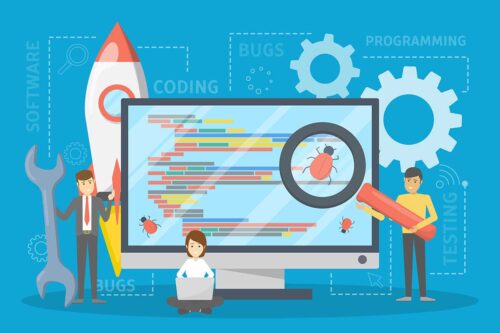
    software testing bugs cartoon

    However, these tools aren’t perfect, and still require a tremendous amount of time and expertise to use correctly.

    We’ve developed our own in-house Unit Test Tool that works with other COTS tools for a more efficient testing process. It automates some of the processes giving us more time to spend on testing resulting in total time and cost savings. It generates clear concise documentation that is a favorite among certifying authorities. Each construct of our tool is validated, ensuring that it meets the tool qualification requirements of regulators.

    Our Experience

    We have extensive experience performing IV&V on over 70 different military and commercial aircraft projects. This includes avionics systems for components on the Flight Control Computer (FCC), Vehicle Management Computer (VMC), Flight Management Computer (FMC), Electronic Engine Controls (EEC), as well as Health Monitoring Units (HMU) and many more. For assistance with the IV&V of your application, check out our IV&V page for more information, or Contact a Qualified Engineer to discuss your project today.

Ready to Start Your Project?